
 Green Talks

News Articles
Capitalising on China’s 15th Five-Year Plan and global trends to advance Hong Kong’s sustainable development
 05 Aug 2026
- Category
- Keywords
Dear Chief Executive Mr John Lee,
Capitalising on China’s 15th Five-Year Plan and global trends to advance Hong Kong’s sustainable development
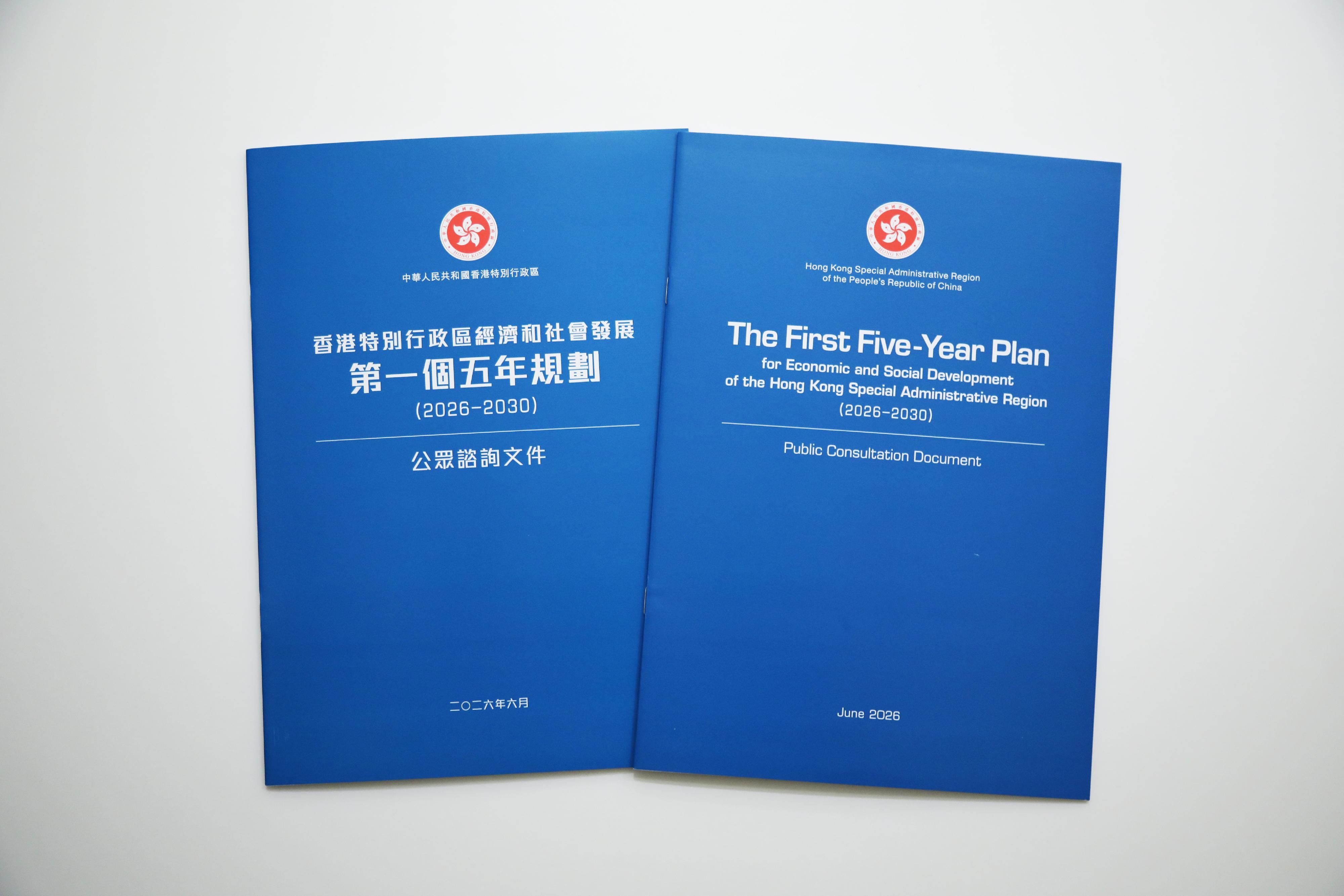
The Green Earth welcomes the public consultation on the 2026 Policy Address and Hong Kong’s first five-year plan.
We submit the following evidence-based recommendations on how Hong Kong can fully capitalise on the green development priorities of the national 15th Five-Year Plan (2026–2030) and corresponding international trends.
The 15th Five-Year Plan emphasises accelerating the comprehensive green transition, advancing Beautiful China construction, improving energy efficiency of key facilities (including computing infrastructure), strengthening circular economy practices, and fostering green production and lifestyles. Hong Kong’s unique position under “One Country, Two Systems” enables it to translate these national directions into concrete local measures that will also enhance our international competitiveness.
1. Energy efficiency of data centres
Data centre electricity consumption in Hong Kong rose by more than 75 per cent between 2018 and 2023, according to Electrical and Mechanical Services Department figures. Associated annual carbon emissions increased by approximately 35.6 per cent over the same period, from roughly 685 000 tonnes to 922 000 tonnes. The Sandy Ridge Data Facility Cluster alone has a designed capacity of around 220 MW. Even under relatively efficient assumptions (PUE of 1.3 and 70 per cent load factor), annual electricity use is estimated at 1.754 billion kWh—equivalent to about 3.8 per cent of Hong Kong’s total electricity consumption or the annual use of roughly 640 000 three-person households.
With the number of data centres projected to grow from the current level of around 61 to 81 by 2030, demand-side management is essential. China’s national standards and regulations already require new large and ultra-large data centres to achieve PUE no higher than 1.25 (and 1.2 at key hub nodes).
Recommendations:
a. Introduce corresponding limits in the Building Energy Code: new data centres should not exceed a PUE of 1.25; existing facilities should reach 1.3 or below within a clear 3–5 year transition period.
b. Require industry to regularly provide data to the Government and the public on PUE, electricity and water consumption, and carbon emissions.
c. Update the Energy Saving Plan of Hong Kong with phased targets that align the import of renewable energy or low-carbon electricity with demand control.
2. Shore power at Kai Tak Cruise Terminal
Since the International Maritime Organization will soon tighten regulations on carbon emissions by maritime transport, decarbonisation of shipping through low-carbon fuels and onshore power systems has become the consensus of the shipping and cruising sectors. Government data indicate that of 37 cruise ships that called or were scheduled to call at Kai Tak Cruise Terminal between 2024 and 2026, 33 (approximately 89 per cent) were already equipped for using shore power. Space for the infrastructure was reserved during the terminal’s construction, and a feasibility study has been completed.
Mainland cruise terminals have already installed shore power, and global ports are rapidly expanding capacity. Early installation would reduce local air pollution, enhance Hong Kong’s tourism competitiveness, and demonstrate alignment with emerging international trends of maritime decarbonisation.
Recommendations:
a. Release the study findings and announce a clear way forward without further delay.
b. Pursue a public–private partnership involving the power companies, terminal operator and Government.
c. Explore the possible use of green bonds for initial capital. Introduce port fee incentives for vessels using shore power.
3. Online shopping packaging and producer responsibility
Our 2026 survey of 505 respondents found that over half considered online shopping packaging excessive, while more than 70 per cent reported difficulty in handling such waste. We estimate that e-commerce packaging waste in Hong Kong exceeds 2.7 million kilograms annually. Since 1 July 2026, national standards restricting excessive packaging for express delivery have taken effect, but a regulatory gap remains for cross-boundary parcels once they leave the Mainland.
The common legislative framework for producer responsibility schemes was enacted in July 2025. Subsidiary legislation for plastic beverage containers, beverage cartons and electric vehicle batteries is expected to be brought forward for consultation in the coming months. Related infrastructure—including Hong Kong’s first large-scale EV battery recycling facility at EcoPark, which commenced operations in July 2026—is already coming on stream.
Recommendations:
a. Proactively coordinate with Mainland authorities to monitor packaging practices post-shipment.
b. Require major online platforms that operate their own logistics chains to establish take-back points and transition to reusable packaging systems.
c. Extend Producer Responsibility Schemes to the e-commerce sector in the longer term.
d. Publish clear implementation timelines for existing PRS legislation on beverage containers and EV batteries so that facilities are not left underutilised.
e. Design a deposit-refund system for beverage containers, with convenient return points and meaningful recovery and reuse targets, aiming for 70 per cent recovery within 2–3 years (drawing on successful models in Singapore and many European Union countries).
f. Incorporate targets for EV batteries that prioritise reuse and second-life applications (including energy storage) before material recovery to “black mass.”
4. Light pollution
Official statistics show that light nuisance complaints under the “miscellaneous” category reached nearly 800 cases in 2025 (428 related to decorative, promotional and advertising lighting and 368 to functional lighting). This represents a substantial increase from levels recorded around the time the voluntary Charter on External Lighting was launched in 2016. The Charter has not reversed the upward trend in complaints. Light pollution is being addressed in the national Ecological Environment Code and through national standards and town planning.
Recommendations:
a. Expand existing legal tools on building installation and land use planning to strengthen regulation and better protect the public against light pollution.
b. Introduce mandatory switch-off times for non-essential outdoor lighting as a practical first stage.
c. Integrate lighting standards into town planning, light-emitting product requirements and building approval processes.
5. Capital of Green Events
A recent study estimated that embedding green requirements into mega events could generate nearly HK$1 billion in annual local value-added, through retention and attraction of higher-value international events and the development of related green services. In 2025 alone, mega events were estimated to have attracted approximately three million visitor trips, generating nearly HK$9.8 billion in spending and HK$5.7 billion in economic value-added.
Recommendations:
a. Incorporate energy, waste and emissions performance criteria into the “M” Mark and Mega Events Fund application requirements.
b. Revive a green voucher or incentive scheme for certified green procurement and services to support both environmental and economic objectives.
6. Sustainable Tourism
The beautiful countryside and country parks are valuable assets of Hong Kong. In response to increasing local demand and rising interest from mainland and overseas visitors, the development of sustainable tourism management models and practices is imperative.
Recommendations:
a. Undertake a systematic assessment of the ecological carrying capacity of each potential visitor site across Hong Kong, with input from environmental professionals and departmental expertise.
b. Establish awareness and precautionary measures at the earliest planning stage.
c. Designate high-capacity areas for broader public access while subjecting ecologically sensitive zones to enhanced protection, with strict limitations on supporting infrastructure to prevent irreversible ecological damage.
d. Adopt holistic management approaches to ensure the long-term sustainability of natural resources, enhance visitor experience, and reduce management costs over time.
7. Additional practical measures
Recommendations:
a. Accelerate on-site pre-treatment of food waste at the community level (converting waste into slurry before centralised transport) to reduce logistics costs and improve the efficiency of downstream facilities.
b. Relocate Green@Community points into vacant municipal buildings to lower rental costs while supporting local markets.
c. Expand micro-forests of native species in urban and new development areas to enhance biodiversity and mitigate the urban heat island effect.
d. Encourage the conversion of locally collected used cooking oil into sustainable aviation fuel or biodiesel to add higher value to an existing waste stream.
e. Improve statistical methods for waste data to enable more precise policy design.
These recommendations are practical, aligned with national policy directions and international best practice, and supported by available data. They would strengthen Hong Kong’s environmental performance, support a higher-quality economy, and reinforce the city’s contribution to national green development goals. The Green Earth would be pleased to discuss the above recommendations further with the authorities or provide additional information and analysis.
Sincerely,
Steven Chan
Environmental Affairs Manager
The Green Earth
 Back
Back
 21 Oct 2024