

 Green Talks
Top Collection of us (Chapter 4)
Events Go Green—It All Began with a Race
“If The Green Earth had not existed over the past decade, what would Hong Kong look like today?”
When we put this question to various interviewees, one reply stood out: “Many races would still be littered with plastic cups, and recycling bins would still be overflowing with banana skins.”
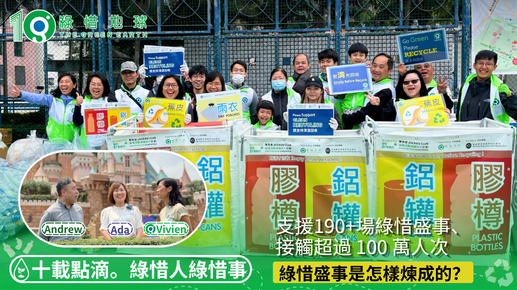
Over the past ten years The Green Earth has supported over 190 large-scale events in planning and implementing green events initiatives. The team has organised these hands-on experiences into the ‘Green Event Waste Reduction Practice Handbook’ and an online resources platform, aiming to introduce waste reduction at major events as an industry norm.
And the starting point of it all was the trust and support of a partnering organisation that shared the same vision — and one running race.
Let us turn the clock back to around 2016. At that time, event organisers and participants in Hong Kong generally lacked awareness of recycling, and supporting infrastructure was limited. While many corporations paid lip service to environmental protection, few were willing to put it into practice. Hong Kong Disneyland was one of those rare exceptions. That same year The Green Earth was founded and launched its “Events Go Green” campaign.
When Hong Kong Disneyland management learned about this new initiative, they proactively invited collaboration to promote waste reduction at the ‘Hong Kong Disneyland 10K Weekend’ (10K Weekend), which was then the second largest race in Hong Kong. Why choose an NGO that had only just been established? Ada Mung, Manager of Environmental Sustainability at Hong Kong Disneyland Resort, gives a crisp answer: “Our environmental visions were perfectly aligned.”
This alignment of vision also stemmed from the long-standing commitment to waste reduction among the NGO’s team members — particularly Vivien Cheng, Acting Executive Director and Director of Community Partnership of The Green Earth. Long before joining the organisation, Vivien was already a devoted runner and had participated in many races. She knew first-hand the joy and sense of self-transcendence that running races bring, but she had also witnessed the shocking volume of single-use waste left at event sites. For years she had been eager to act, asking herself: When can we finally turn a race into a green event?

Image: Ada recalls the collaboration begins as the environmental visions were perfectly aligned
Waste Reduction Is Not Just About Adding Recycling Bins
Ada recalls that right from the start of the collaboration, The Green Earth already possessed a thorough and meticulous understanding of how to plan recycling facilities — from their locations and placement to crowd-flow management, and even how to prevent cross-contamination. Real-time adjustments during the event were also highly professional and practical.
“Doing recycling well is not about how many bins you put out,” Vivien explains. “It is about making sure they actually work.”
In the past, many events commonly used standard 660-litre green rubbish trolleys lined with black bags. Vivien says bluntly: “It definitely did not look good, and it simply made people mix everything up.”
To match the cheerful atmosphere of the theme park, the team designed bright, colourful recycling bags accompanied by eye-catching banners and promotional signage so that runners could spot them from afar. They also tailored the recycling categories for the race, creating clearly designated homes for paper cups, plastic bottles, race-bib clips, luggage tags and banana skins. In this way, they hoped to give runners the easiest, most effortless way to hand over their recyclables confidently, ensuring that every piece of waste generated by the race found a useful next destination.
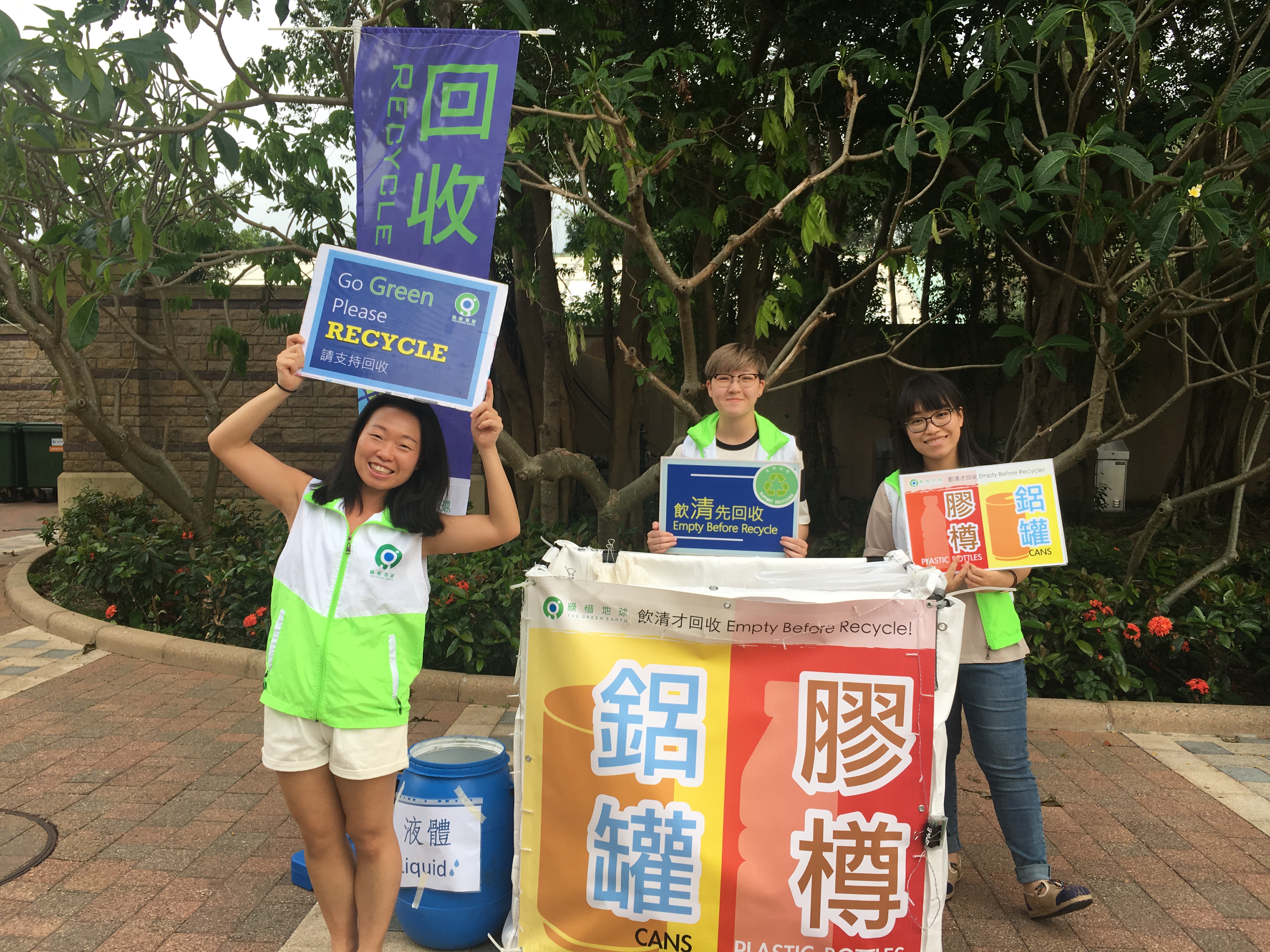
Image: The Green Earth designed eye-catching recycling bags and hand-held signs
The Action-Takers of the Green Racecourse
Each year, the 10K Weekend is held over three consecutive days. To support this, The Green Earth mobilized more than a hundred volunteers, who had to arrive at the venue before 5 a.m. for setup, with many staying until the very last moment to help with cleanup. Ada noticed that many of them were familiar faces who returned year after year — energetic, dedicated and genuinely enjoying themselves. “It is remarkable and quite magical that The Green Earth can mobilise so many high-quality volunteers,” she says.
Vivien cuts straight to the core: “The volunteers are so committed because they carry the mission of educating the public and promoting waste reduction. They are not here just to manage garbage, and they are certainly not here just to clear up everyone else’s mess, but to change entrenched habits. ”
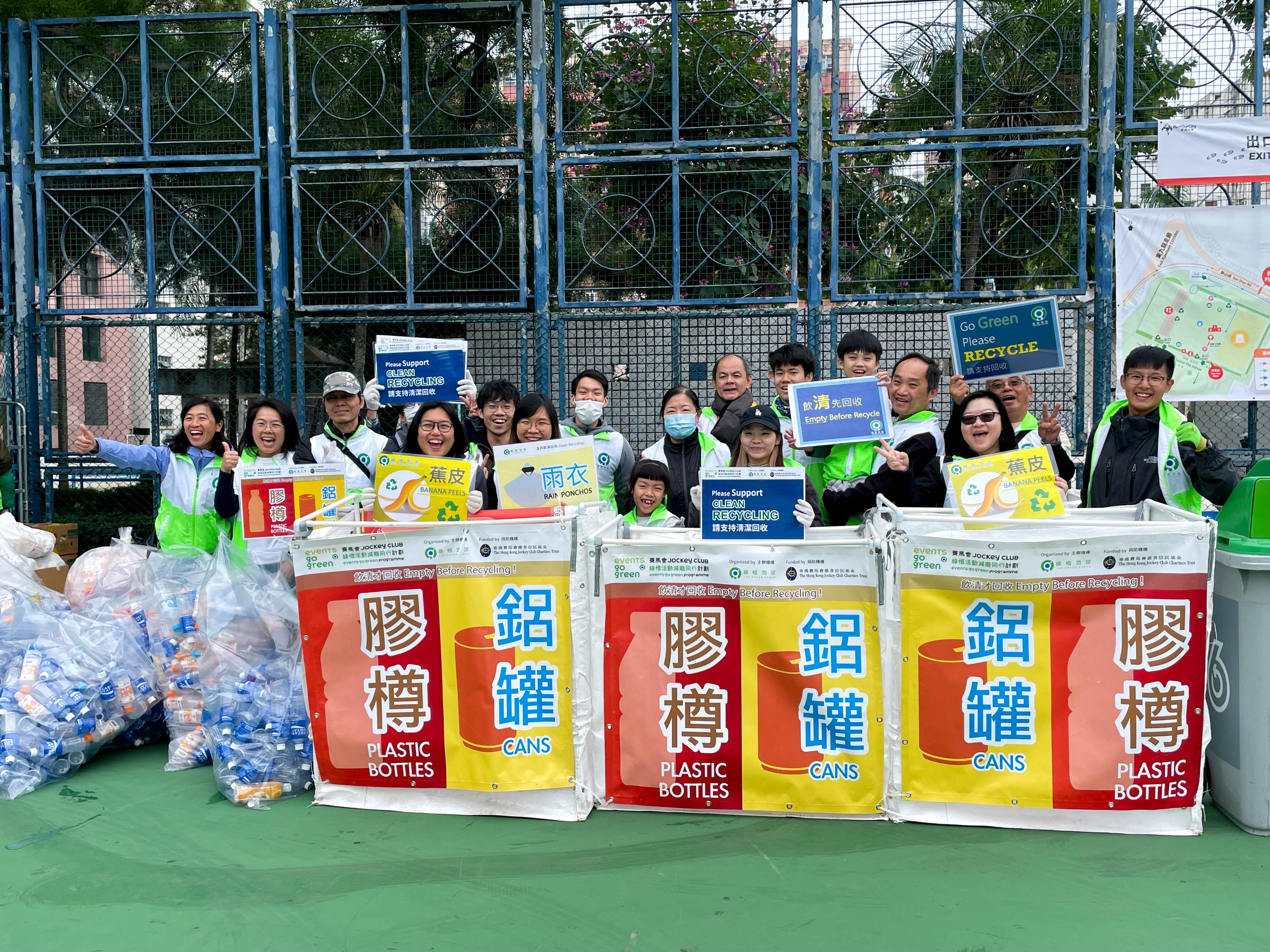
Image: Volunteers shoulder the mission of educating and promoting waste reduction, dedicating themselves exceptionally.
Once on-site recycling wraps up, it is time for The Green Earth’s long-standing partner, the team from New Opportunity Limited, to take the stage. Acting as the dependable “last line of defence,” they ensure that all collected recyclables — including aluminium cans and plastic bottles — are successfully channelled back into the resource cycle.
Take the massive piles of banana skins left by runners. In the early days no one wanted them; Andrew, the Manager at New Opportunity, would transport them to his company’s self-operated farm for composting. Later, as food-waste recycling machines became more widespread, they switched to mechanical processing. The methods changed, but the original intent remained the same.
“In the beginning the recyclables coming from large-scale events were incredibly heavy and filthy,” Andrew recalls. In the early years the recycling bins were always contaminated with large amounts of unconsumed beverages, banana skins, food residue and tissues. This not only added dead weight and drove up processing costs but also contaminated resources that could otherwise have been recycled. Today’s green events no longer suffer from such chaos.
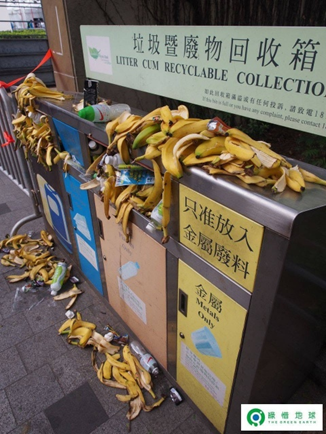
Image: Before the concept of sustainable events was introduced, recycling was often chaotic.
Plastic Bottle Recycling: Dropping, Not Rising?
Through this approach the partnership between The Green Earth and Hong Kong Disneyland has lasted a decade (with a temporary suspension during the pandemic). Every year after the race the team reviews the effectiveness of their waste-reduction efforts, providing professional analysis and recommendations to improve deployment for the next event. These “evolutions” are meticulously recorded in the working reports submitted to Hong Kong Disneyland.
Yet over these years the number of plastic bottles actually recycled from the event has fallen rather than risen. Had their efforts gone backwards?
The answer is exactly the opposite.
Vivien points out a crucial concept: the ultimate goal of waste reduction is not to chase higher recycling numbers, but to reduce waste at source. Therefore, while the team promoted clean recycling on one hand, they also set up water-refill stations, encouraging runners to bring their own bottles and gradually fostering a new racing culture. The Green Earth volunteers reminded participants that drink refills were available. They suggested that those who had collected bottled drinks but not used them could place them at the Surplus Table after the finish line to reduce waste. The key message to runners was: You have a choice to be a green runner!
Ada laughs as she recalls almost "screaming herself hoarse" while promoting the refill stations at the finish line during the first year. But seeing more and more people respond made every bit of the effort feel worthwhile. Furthermore, Hong Kong Disneyland engages its partners early every year to review their inventory list—identifying what can be recycled, what cannot, and the projected distribution quantities. This pre-event communication helps raise awareness of source reduction.
The team’s total dedication spread like ripples in a pond. Eventually, many other participating partners began proactively collecting recyclable materials and delivering them to The Green Earth’s recycling stations, creating a beautiful atmosphere of synergy. “The 10K Weekend race covers a massive area, and our volunteers and staff can't be everywhere at once. But when everyone unites for a common goal, the impact is entirely different,” Vivien says.
Changing social conditions and public habits brought challenges to these hard-earned waste-reduction habits. When the 10K Weekend returned in 2023, many people were still hesitant about using water-refill stations. To rebuild confidence, The Green Earth arranged for volunteers at every water station, equipped with masks and gloves, to operate the taps and hand out water. The team tackled the problem head-on and successfully pulled it off.
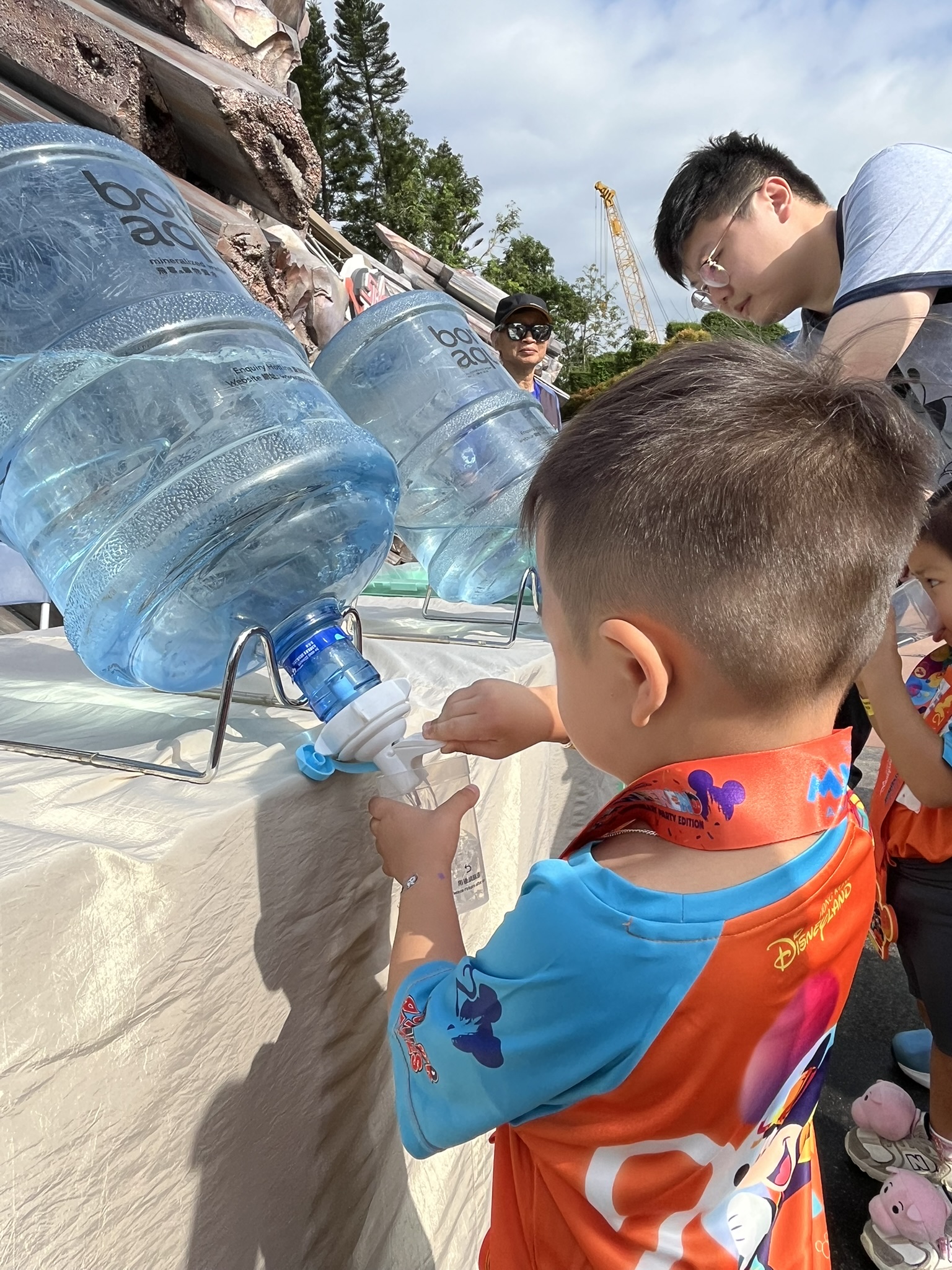
Image: The Green Earth setting up water-refill stations at event venue to reduce waste at source
The Common Language of Green Events
The ten-year journey of waste reduction has been like water dripping on stone, slowly carving out change. Ada has seen this transformation play out on the racecourse: from the early days when some people did not even know recycling was an option or how to sort their trash, to today, where many runners proactively sort their waste before they even reach the bins. She has even seen parents at the 3K Family Run taking their children to the recycling stations for a real-life lesson in environmental stewardship, passing the awareness down to the next generation.
For Ada, environmental elements have long become a defining signature of the 10K Weekend. Moreover, the relationship between Hong Kong Disneyland and The Green Earth has transcended that of standard client and vendor. “This is a journey of long-term partnership growing and improving together. It is priceless.” As the 10K Weekend becomes the new Magic Run Fest, Hong Kong Disneyland and The Green Earth will continue this spirit of partnership, working hand in hand to promote the “Events Go Green” culture.
Meanwhile, at these green events, Andrew has always spotted The Green Earth’s staff proactively fishing misplaced recyclables out of general rubbish bins, rather than just standing by and directing volunteers. This willingness to lead by example has forged a tacit team ethos: “Save every single piece we can.”
He greatly appreciates how precious this organisation is. They have never stopped at mere advocacy and slogans; instead, through the unity of knowledge and action, they drive change one step at a time.
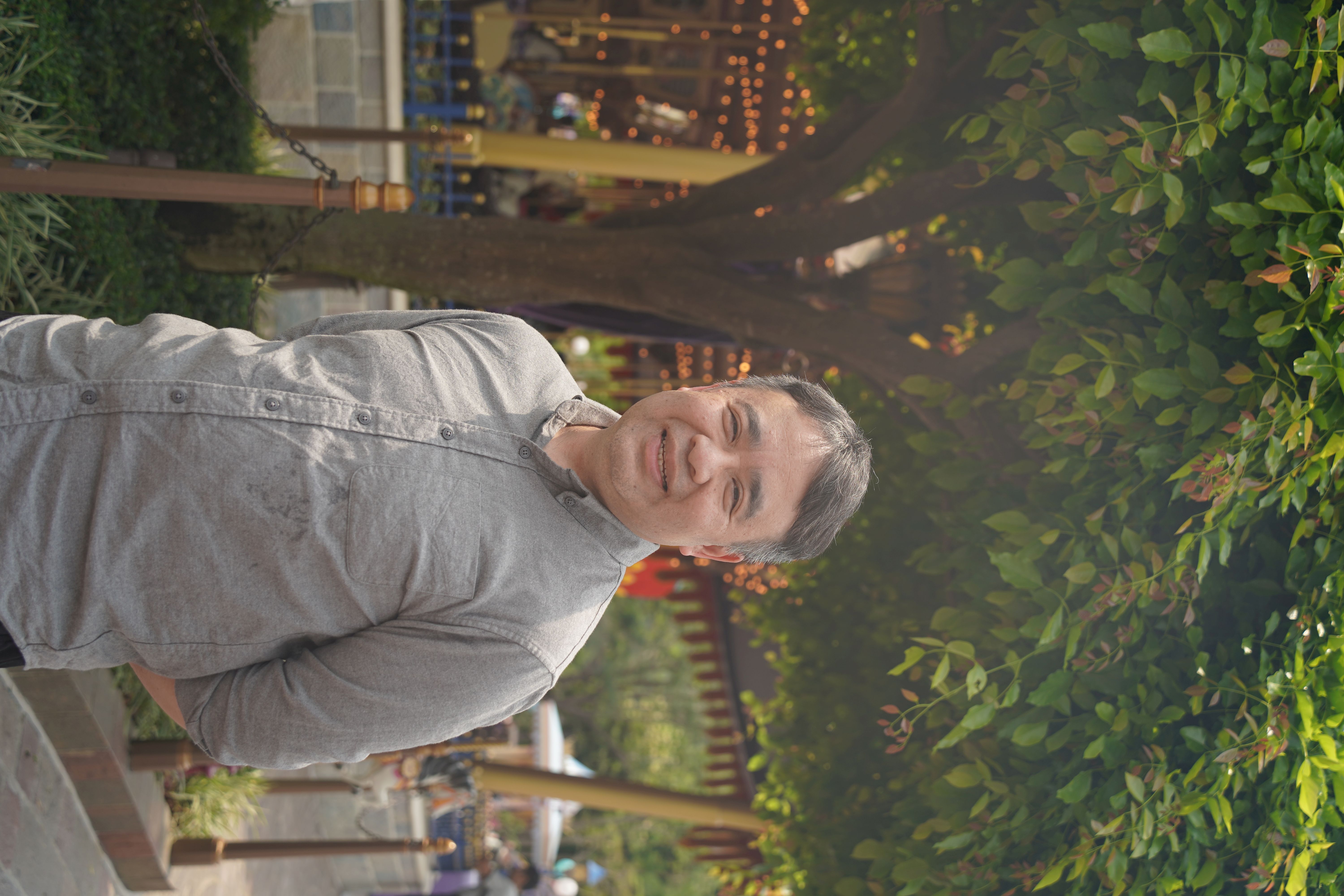
Image: Andrew is impressed by The Green Earth’s staff dedication in the events
Since its establishment, The Green Earth has supported the Hong Kong Disneyland 10K Weekend, followed by events such as Oxfam Trailwalker, the Stanley Dragon Boat Championships, Hong Kong Streetathon, Race for Water Challenge as well as recycling outside mega-concerts by global acts such as Mayday and Ed Sheeran. Over the past decade, the organisation has supported more than 190 green events, with participation exceeding one million people. These rich practical experiences have profoundly deepened the team’s understanding of what organisers and participants truly need, allowing them to propose event solutions that are more appropriate and genuinely grounded.
In 2025, The Green Earth collaborated with the certification body SGS to launch the Green Events Certification Scheme, which provides environmental guidelines and also gives recognition to organizers who perform well.
“Every event is unique, yet each always has its own suitable way to go green.” “The Green Earth alone could never make these green events a success,” Vivien says. “It requires organisers who are willing to take that first step, a passionate and capable volunteer team, and practical, reliable recyclers. Everyone must share the same vision and trust one another. Put simply, everyone has a role to play.”
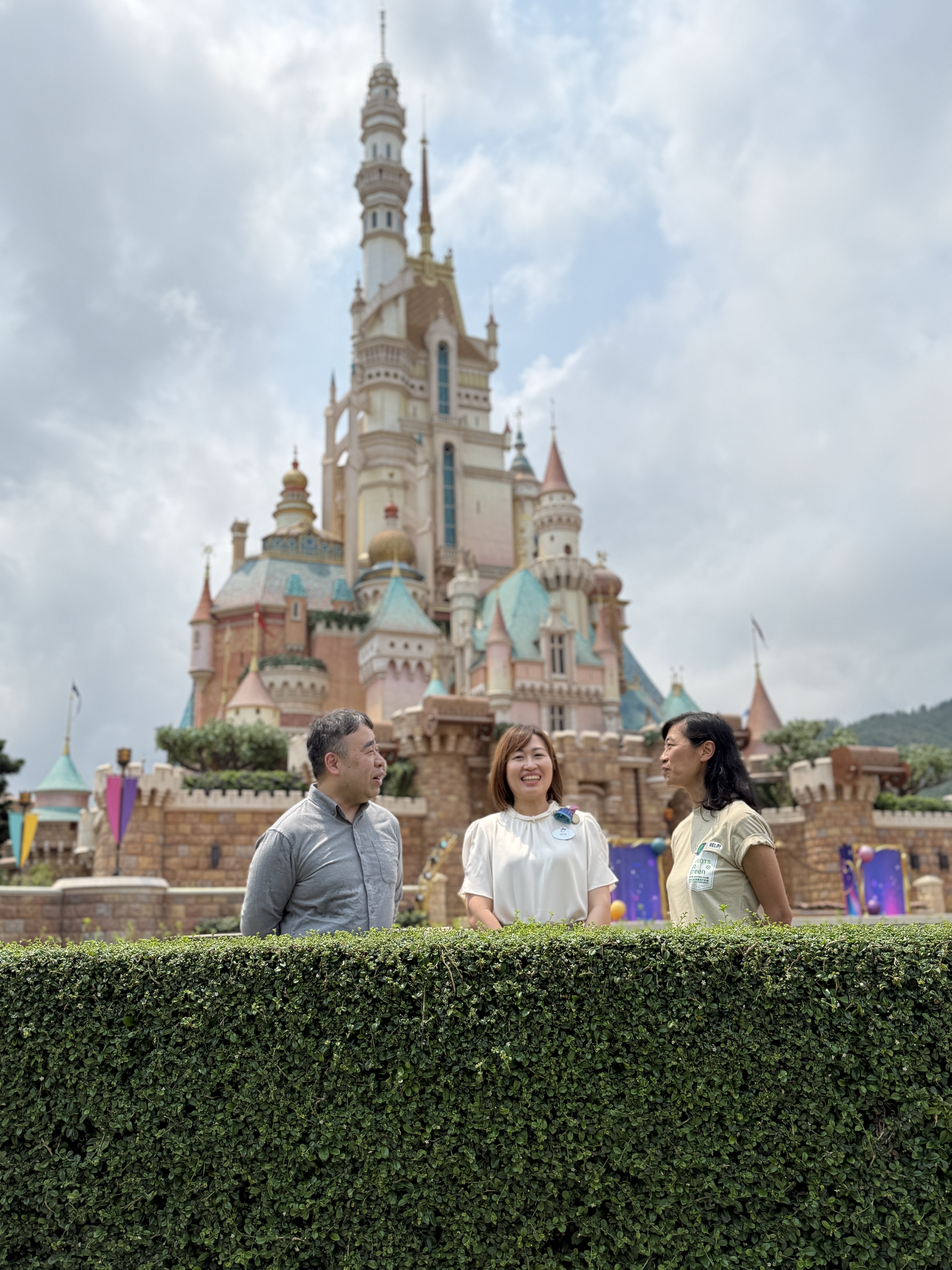
Image: Green events requires the collaboration of event organizer, green group, and recycling partner.
----------------------------------
The 'Top Collection of us' series will bring you vibrant stories of The Green Earth throughout the 10th anniversary celebration, stay tuned!
