

 Green Talks

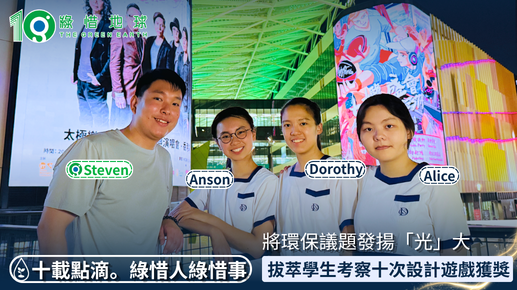
Top Collection of us (Chapter 2)
Bringing the Environmental Issue in the Limelight
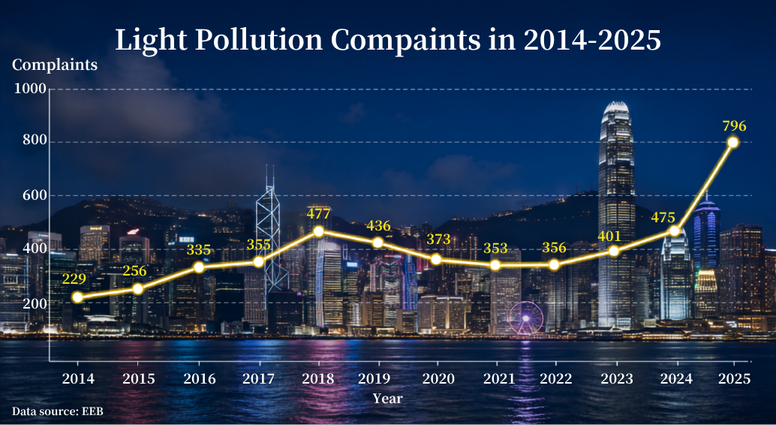
The issue of urban light pollution emerged around 2000 in Hong Kong. However, the concern towards light pollution continues to rise across the city, related complaints in 2025 approached nearly 800 cases — a massive 67% increase from the previous year. Incidents of light nuisance are no longer confined to traditional hotspots such as Yau Tsim Mong, Wan Chai and Causeway Bay. Apart from the Outlying Islands and Sha Tin, complaints rose almost across the board in all 18 districts.
Kowloon City recorded the sharpest rise, with cases jumping threefold from 34 in 2023 to 107 in 2025. Why Kowloon City, of all places?
The answer begins with the story of Steven Chan, Environmental Affairs Manager at The Green Earth, and three students from Diocesan Girls’ School. Coincidentally, all of them used the phrase “eye-opening” to describe their first encounter with the issue of light pollution.
Before joining The Green Earth, Steven attended a sharing session organised by the group as a volunteer. It was then that he learned light nuisance affects far more than just humans — it impacts the entire ecosystem. One recent example is the growing trend of high-intensity lighting used by fishing vessels. These blinding beams can reach the Southern, Eastern and Sai Kung districts, painting large swaths of the night sky a deep, eerie blue. This not only disrupts residents’ sleep and harms marine ecosystems, but also threatens maritime safety.
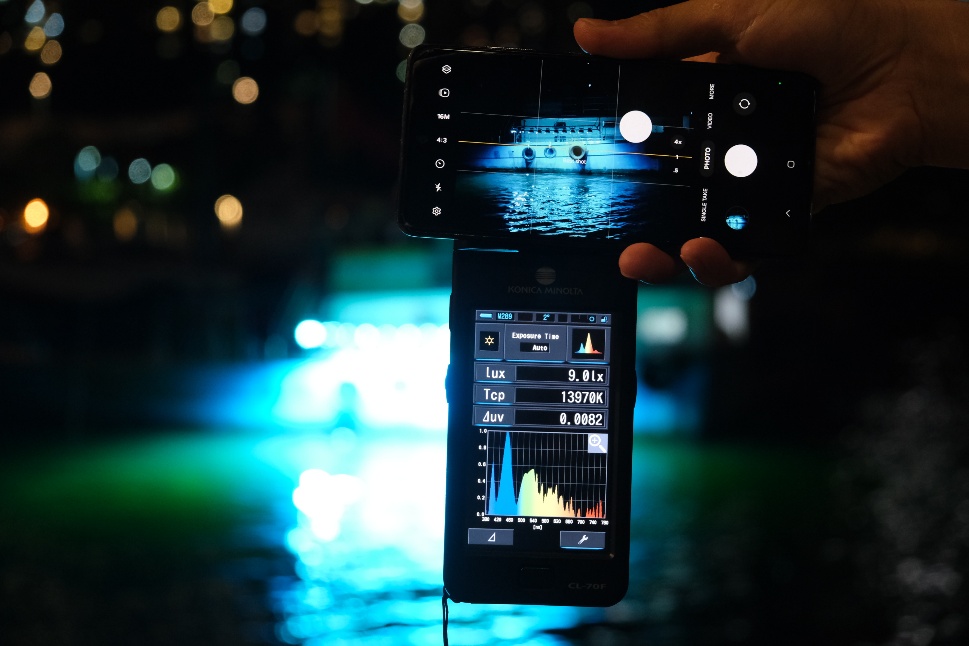
A group of citizens formed a “Concerning Illegal Usage of Bright Light at Sea in Hong Kong” group and spent two to three years locked in fruitless loops with government departments before turning to The Green Earth for help. The organisation immediately arranged meetings with officials, contacted district councillors, and raised awareness through social media and the press. In 2025, the Agriculture, Fisheries and Conservation Department agreed to fund modified fishing lights for fishermen, reducing light scattering without affecting fishing efficiency.
Steven believes the intervention by The Green Earth was key to prompting a swift government response. “It reflects the professionalism, credibility and influence that The Green Earth has built up over years of working on light pollution.
But why focus on fishing-vessel light pollution, which seems a niche topic?
Steven explains the strategy: once an environmental issue gains wider attention, it often hits a standstill. Light pollution is no exception. Light pollution caused by high-intensity lights on fishing boats offers a fresh angle, rekindling public concern over light nuisance.
Long before The Green Earth was founded, its founders had already brought light pollution into public-policy debates in 2008. At the time, Chief Executive Donald Tsang promised to consider regulation, but progress dragged on for seven years until the issue cooled. In 2016, the Environment Bureau dropped the idea of legislation, opting instead for a voluntary Charter on External Lighting that encourages signatories to switch off outdoor lighting installations from 11 p.m. to 7 a.m.
Yet the continuous rise in complaints over the years shows that while public awareness has grown, the problem has worsened. Steven points out that as energy-saving lighting technology advances, new LED displays and massive TV screens create harsher glare and more disruptive flashing effects. This has further exposed the limitation of the voluntary Charter.
The Green Earth was founded in 2016 — the same year the Charter was launched. Having followed case after case since then, Steven knows that the handling case by case could not fix the root problem. To achieve this, The Green Earth teamed up with the engineering consultancy Arup and the Hong Kong University of Science and Technology to measure and simulate urban light nuisance.
Their research findings were published in several international environmental journals and presented at the Ecocity World Summit, providing a scientific baseline to push for light-pollution controls.
[1].png)
Research Highlight: Using tools like software simulation to calculate the brightness of building facades, and find the main fixtures causing light nuisance. This debunks the long-standing claim that there are too many light sources to pinpoint the true cause of pollution.
[1].png)
Research Highlight: Field tests measuring the intensity and sources of light pollution along Sai Yeung Choi Street South revealed that average street-level brightness exceeds international standards by three to four times. The glare stretches vertically up to 32 metres (around 10 storeys high). This data helps evaluate the exact scale and severity of the nuisance, paving the way for targeted solutions.
The spark of concern about light pollution has now reached the younger generation.
In early 2025, the Boys’ & Girls’ Clubs Association of Hong Kong hosted “The Youth ImpACT Award 3.0”, inviting The Green Earth to deliver lectures and field guided tours on light pollution. The team led secondary-school students into older tenement buildings in the bustling heart of Sai Yeung Choi Street South, allowing them to experience the sheer glare of a massive screen across the street through two layers of windows, and to use instruments to measure shop lighting levels.
Among the participants were Alice, Dorothy and Anson, three Form 2 students from Diocesan Girls’ School. Steven, who led the tour, noticed their sharp observations and constant questions. Their discussions quickly moved towards the social and commercial logic behind light pollution.
Alice never expected that the brightest set of lights on the entire tour would come from a famous outdoor clothing store. She questioned why a brand that brands itself as eco-friendly would use such blinding lights. “Is this really the only way to attract customers? If everyone thinks like this, shops will just keep competing to see who can be brighter.”
The curiosity of these three young students eventually turned into action. They designed an educational game that combines live-action role-playing (LARP) with real-world puzzle-solving, hoping to spark public interest in light pollution. Their creation stood out among more than 120 submissions, winning the Gold Award and a HK$20,000 grant to turn their plan into reality.
When the judges asked if they would still do it without the prize money, Anson replied instantly: “We’d do it even without money! This is like our thing.” Her own home had suffered from light nuisance when she was a child.
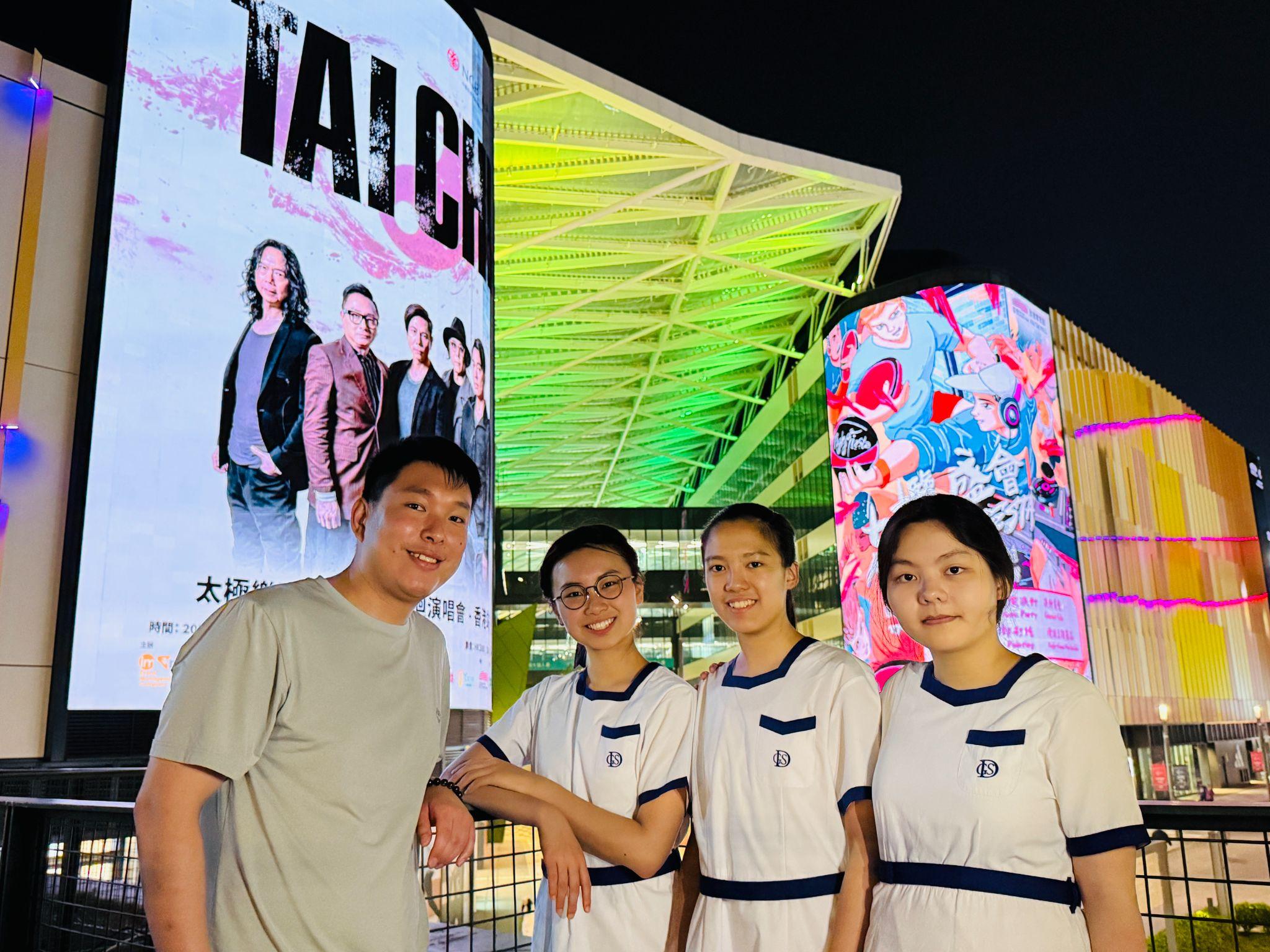
(Image: Steven imparts the awareness to these secondary students. (From right to left: Alice, Dorothy, and Anson)
What kept them going was another factor — fun. “We all love to play. Instead of sitting through a traditional lecture, why not mix immersive experiences with environmental education, letting teenagers solve real-world puzzles while learning about light pollution?” Anson says.
A good LARP needs a solid script, and a solid script needs the right setting. Kai Tak new development area opened the students' eyes again.
Steven is skilled at data collection and analysis. He found that while Kowloon City—a traditional old district—has seen many large neon signs taken down due to redevelopment, light pollution complaints have actually climbed. The newly opened malls added high-intensity searchlights on their roofs that shoot straight into the night sky, looking just like the Bat-Signal from Batman. Meanwhile, a new residential estate installed "zero-blind-spot" floodlights for its swimming pool, drawing around twenty light nuisance complaints from nearby neighbours.
There are also three high-definition TV screens standing in the district. Towering as high as the building itself, they frequently broadcast fast-moving footage of football and rugby matches. Steven overheard a tourist saying, “The advertisement screens would look better if they were brighter, but it would be way too bright if you lived here.”
This casual comment captures exactly what local residents feel. Residents moving into the newly built Home Ownership Scheme estate, right across from the screens, had reached out to The Green Earth for help.
“If the authorities think it's fine just because the development turns off the TV walls at 11 pm under the Charter on External Lighting, they are missing the point,” Steven notes. “The core of the nuisance isn't just the brightness; it's the constant flickering and flashing from changing frames.”
The Technical Memorandum in the Sports Park's Environmental Impact Assessment report explicitly states that if visual screens or signs face residential buildings directly, the primary measure should be to avoid flashing, colour-changing, or dynamic moving effects.
Dorothy points out: “The developer must have received these guidelines and knew that housing would be built right opposite, yet they chose to ignore it.” She and her teammates visited Kai Tak nearly ten times, looking for answers to these contradictions.
The students are not discouraged. They share that since diving into the issue, they have built their own set of values and no longer take it for granted that "brighter means more prosperous." Dorothy believes this immersive experience can bring "small changes, big improvements." Alice adds modestly: “Even if only 1% of participants change their minds, I still think it's worth it.”
Steven remains somewhat optimistic about upcoming policy changes. Mainland China and overseas jurisdictions have seen successful cases of regulating light fixtures recently. In late 2025, a Guangzhou court ruled that a shopping mall’s massive TV screen had to stop operating after residents sued over light nuisance, marking the first successful lawsuit of its kind in the Greater Bay Area.
More importantly, China has already integrated light pollution into its regulations and set clear penalties within its "15th Five-Year Plan" and the drafting of its Ecological and Environmental Code.

(Image: Steven maintains an optimistic view on policy changes ahead)
Looking back at the twenty-year journey of tackling light pollution in Hong Kong, the effort has involved advocacy from green groups, citizen-science research by Dr Jason Pun of the University of Hong Kong, responses from stargazing groups such as the Ho Koon Nature Education cum Astronomical Centre, and support from local communities.
Now, secondary school students are picking up the relay baton. People from different generations and positions are looking after their shared environment and trying to find a balance between prosperity and sustainable development. Light pollution is one of the programmes, also a process of both passing the torch and walking together to bring green values into the limelight.
----------------------------------
The 'Top Collection of us' series will bring you vibrant stories of The Green Earth throughout the 10th anniversary celebration, stay tuned!
