

 Green Talks

Top Collection of us (Chapter 1)
Remembering Where We Started: Ten Years of The Green Earth
Preface
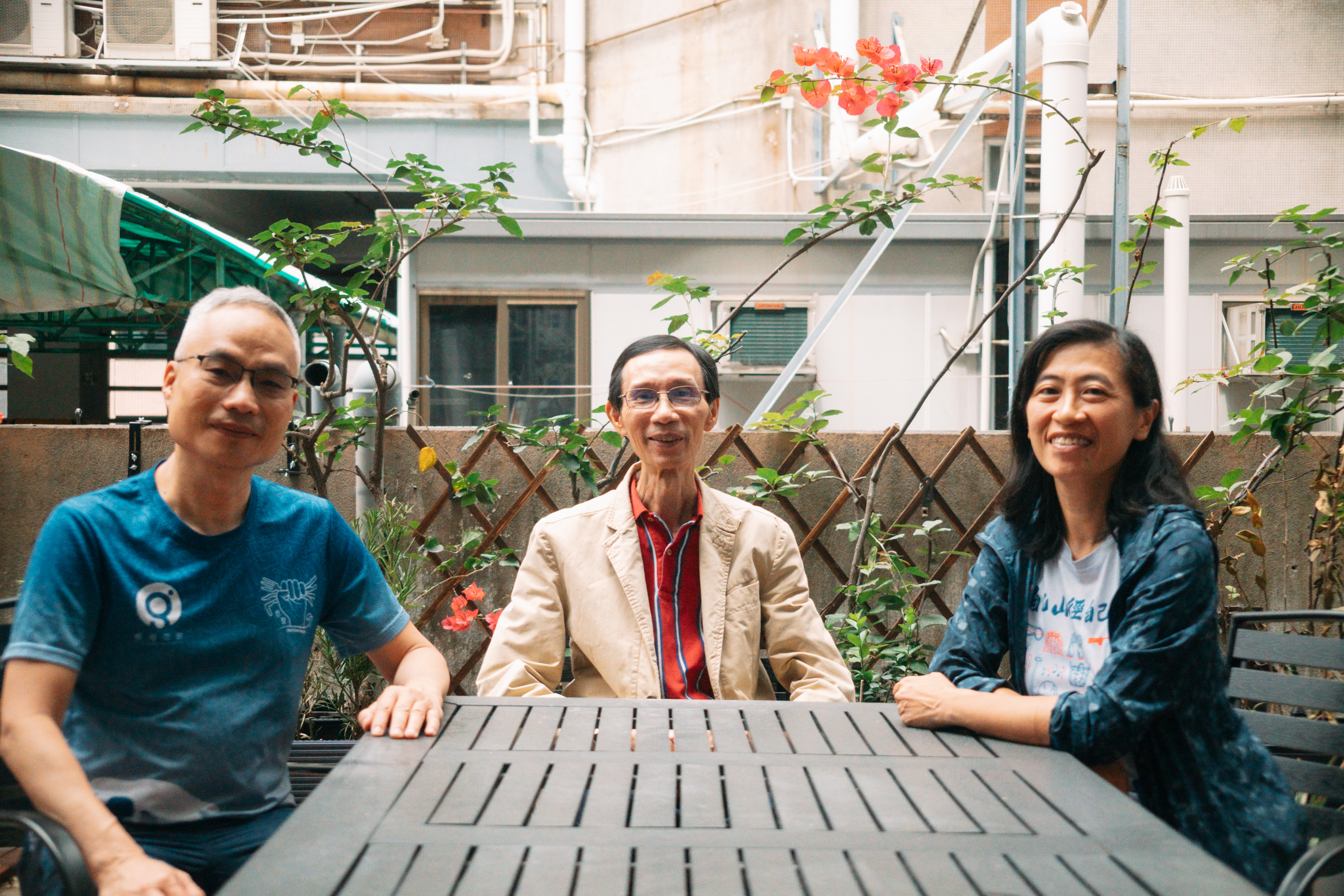
A decade later, we sat down with the three founding members — the “pioneering oxen” of The Green Earth — and looked back at where it all began. The question was simple: over the past ten years, had the things they built left them with no regrets?
Starting from a Small “Iron Triangle”
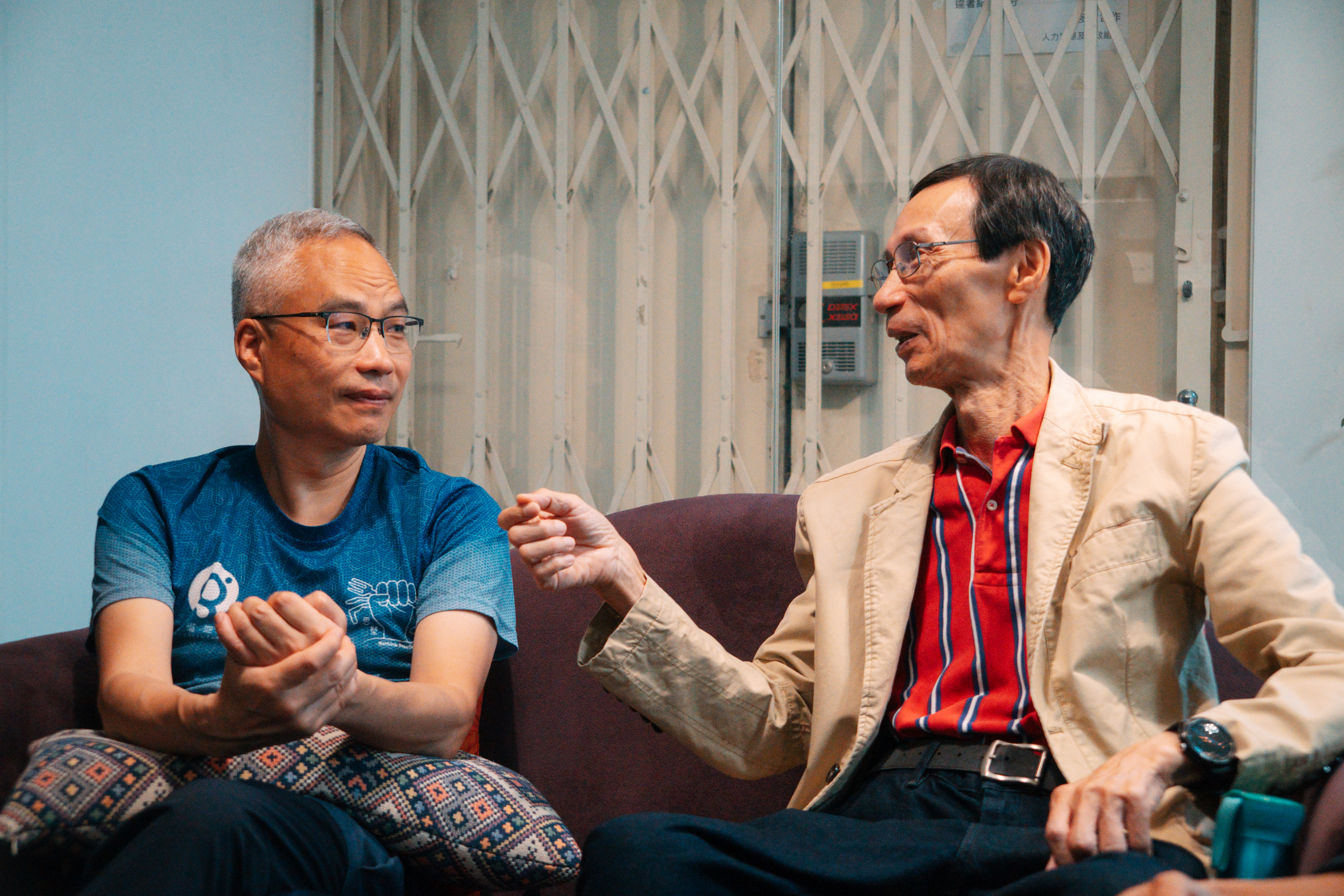
“I was 58 that year, almost ready to retire.” In late 2015, Edwin left a local environmental group after 26 years of service. He faced a crossroads. “I talked to Hahn and found we shared the same aspiration — to keep fighting for Hong Kong’s environment.”
Before founding The Green Earth, Edwin, Hahn and Vivien had worked together at another organisation. They had already formed a strong “iron triangle” with deep networks and solid track records. Edwin excelled at corporate outreach and fundraising, Hahn focused on policy advancement, and Vivien specialised in community collaboration and education.
Hahn recalled: “Civil society felt quite lost back then, but I was confident that we could get things done as a team.” Vivien, the youngest and last to join, added: “Environmental issues were quiet. Most environmental journalists had to cover other beats. Large green groups had to go through many procedures before responding to academic studies or media inquiries. Society needed a more down-to-earth and proactive group to engage with policy.”
The three brainstormed from their experience and quickly agreed: as a small organisation, they would focus on Hong Kong’s resource-consuming urban lifestyle and promote the idea of cherishing resources. This idea shaped the organisation’s Chinese name, with its emphasis on “cherish” (惜).
Self-funding, Salary Cuts and Selling Sunglasses for Loose Change
At the start, Edwin and Hahn funded the organisation with their own savings. Vivien, who joined later, remembered her starting salary was halved. “Everyone took a pay cut. We gradually increased salaries from the junior staff. Edwin even worked as a volunteer for a long time.”
Edwin recalled his mentor Linda Siddall: “She heard abroad that I was starting a new organisation and immediately donated tens of thousands of dollars. She said it did not matter that there was no bank account yet — she trusted me.” That kind of trust warmed the heart for a lifetime. Vivien thanked the two colleagues who joined from their previous employer: “Someone donated a large batch of sunglasses. They sold them at markets, earning loose change while introducing the new organisation to the public.”
That was how the small organisation began — in a tiny office under 200 square feet, with second-hand furniture and a phone, no toilet or pantry. Here they held their first press conference on waste charging policy.
The First Press Conference in Our Tiny Office
Vivien said: “At the time, I wondered how we could hold a press conference in such a small space. But they were bold. They brought in a table and a few stools and set up right by the door.” When colleagues held up garbage bags for the cameras, every lens focused tightly on the speakers and the small white wall behind them. If any camera had shifted even slightly, the messy scene behind the wall would have been exposed.
What struck Hahn more was another press conference that year on producer responsibility for plastic bottles. They borrowed 600 empty bottles from a familiar recycler, cleaned them and spread them across the floor, turning the venue into an impassable “ball pit”. Why the effort? “We wanted journalists to feel how serious the problem was. If it was worth doing, we did it,” Hahn said.
The next day, all major Hong Kong media reported the story. Shortly after, Coca-Cola’s sustainability manager proactively invited Edwin and Hahn to meet and explore ways to make changes. (This was an era when environmental groups had less discussion on waste and big brands paid less emphasis on corporate responsibility.)
Right Foothold and Pace in Policy Advancement
Hahn kept exploring how to drive environmental policies in the new organisation. He gradually found his foothold and pace. He then brought more issues into public view — Hong Kong’s “waste siege” crisis under China’s new import policy, brand audits on marine litter, light pollution, and promotion of clean recycling. In the first two years, the organisation’s visibility matched that of larger groups. “Their press conferences always attracted many media friends. I think it was because the quality was guaranteed — with compelling angles and solid content,” Vivien said.
Some work had to stay quiet. Hahn said: “I once received information about 123 containers of copper slag. They were originally heading from Romania to Chinese Mainland but were turned back twice and ended up at Hong Kong for transshipment. I communicated privately with various people and kept monitoring, but I did not speak publicly in the organisation’s name. It was tense. The parties involved had complex backgrounds, and our new organisation could not afford to be targeted.”
This monitoring relied on private donations — “relying on friends’ goodwill”. “The organisation had just started. How could I ask for resources on work with no publicity and no income? For the next four years, I sent progress reports to seven donating friends every year.”
Early Days Sustained by Project Work
While colleagues spoke out about policies under the spotlight — and monitored quietly off it — the rest of the team worked on another front. “At that time we were all running projects to raise funds,” Vivien said.
Early project work that sustained the organisation included promoting waste reduction for the Hong Kong Disneyland 10K Weekend, which grew into a ten-year partnership. The team also helped companies plan one-off tree-planting activities. Later, the Agriculture, Fisheries and Conservation Department (AFCD) invited them to join the Country Parks Plantation Enrichment Programme.
This invitation was no coincidence. Edwin and Vivien had already built experience and reputation through multiple planting projects at their previous organisation. Vivien said: “We had ongoing discussions with officials about how better management could improve ecological benefits and biodiversity, as local tree species tend to grow more slowly than non-native ones. AFCD later launched the Plantation Enrichment Programme — right around the time we founded the organisation.” The organisation’s enrichment work covered 17 sites inside country parks.
Walking Together
In 2017, The Green Earth held its first charity night-walk fundraiser. Edwin felt for the first time that the organisation had found its identity. “We had obtained a charitable status. We could openly fundraise through Night Walk at Tai Mo Shan. That morning I sent out the invitation emails, and by afternoon a company had already replied to sponsor the top tier. Those responses told us we were heading in the right direction.”
Edwin focused on corporate partnerships and emphasised “walking together”. “Some environmental groups are being criticised as armchair environmentalists who only criticise. We are not like that. We criticise and we propose solutions. We have always offered diverse, systematic environmental solutions.”
The Night Walk at Tai Mo Shan also introduced many people to The Green Earth in person. A cold front arrived that day and mountain temperatures dropped to single digits. Yet enthusiastic staff and volunteers prepared hot sweet soup at Rotary Park and invited everyone to share it with reusable containers. Participants walked to the summit at the magical hour between day and night, with astronomy guides for stargazing, night-light painting workshops and other thoughtful activities. Every aspect of the event showed care and support from many sides.
The event put many waste-reduction ideas into practice. With over 600 participants, it generated only one kilogram of plastic bottles, four kilograms of fruit peels and two bags of rubbish. Edwin said firmly: “Four words: we walk the talk.”
The “Magical” Sustainable Trail Project
After the organisation had gained its foothold in the second year, Vivien launched what she called her “dream project” — the Sustainable Trail Initiative. Several factors aligned: frequent hiking activities accelerated topsoil degradation; citizens had formed a group against concrete trails; government departments were open to dialogue and collaboration; and links with trail researchers provided scientific grounding for on-site conservation.
Vivien said: “The trail issue covers both policy and public education. The topic was ready to grow, but it still needed strategic push across society. Otherwise it would stay in occasional Legislative Council questions or academic reports.”
The turning point came when AFCD invited them to learn trail restoration. “I asked myself whether to join or not. It meant investing in a brand-new project with an unknown future. Our first funding application failed — the funder did not understand why an environmental group would get involved in public works.”
From 2019 onwards, The Green Earth secured several grants and launched public trail-restoration activities. In the following years, the public accumulated substantial knowledge about sustainable trails and began to understand that repairing trails with natural materials requires adjusting daily hiking habits to balance convenience and ecological conservation. The project also created Hong Kong’s first “Trail Repairing Volunteer Squad”. Many volunteers later continued supporting the organisation on city-to-countryside issues.
Online discussion about concrete trails shifted from near-uniform criticism to a rational, scientific debate. People became part of the solution. Vivien called it “a magical case full of power.”
Hahn added: “It is rare in Hong Kong to have a project that lets people connect tangibly with the land and cultivate love for it.”
“Super Connector” Driving Change
This reflected The Green Earth’s model for driving change: influence sustainable development policy, persuasion to encourage corporate environmental responsibility, and guidance to help citizens understand and join the process. The three areas of work were independent yet closely linked and mutually supportive.
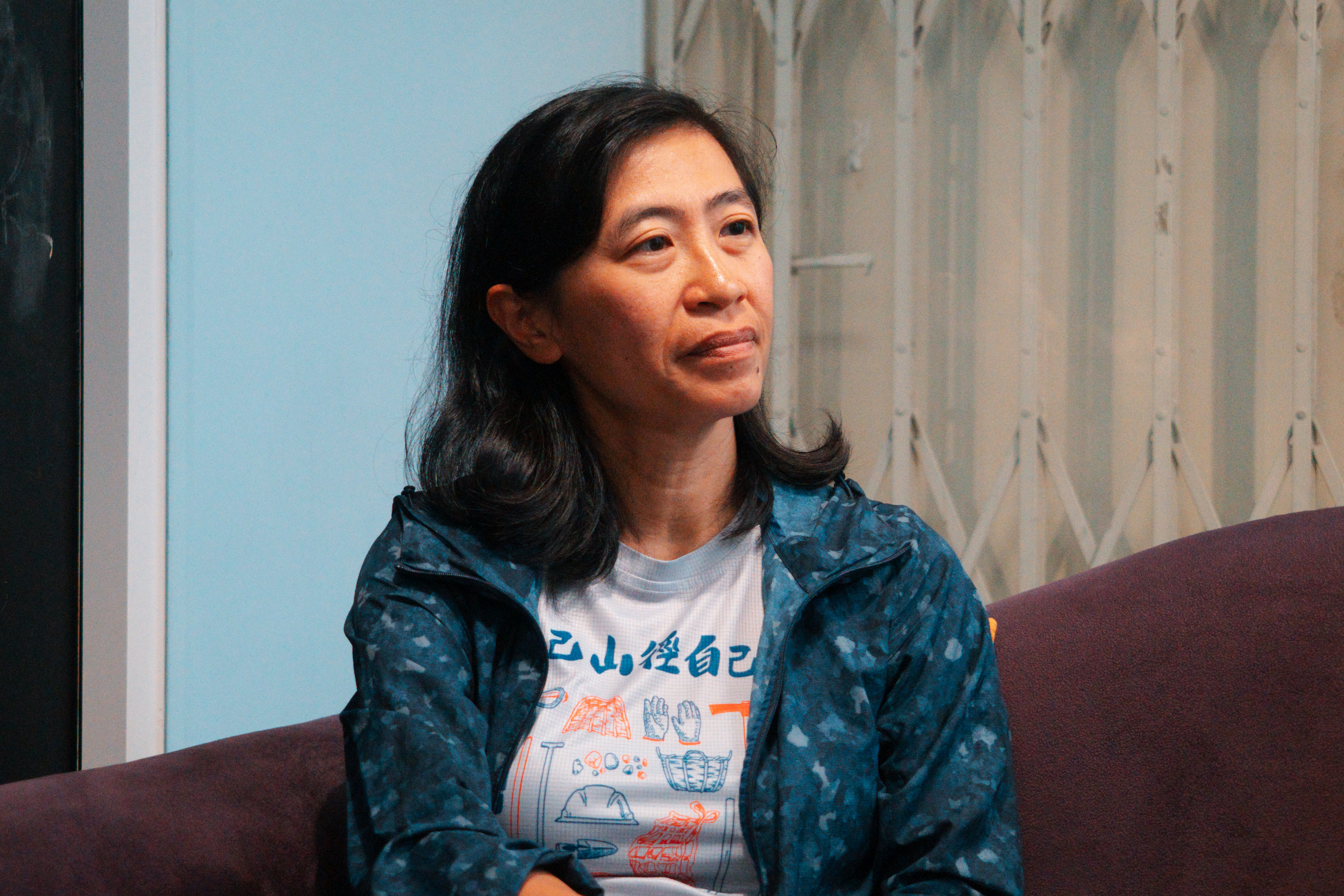
Vivien saw the organisation’s place in the environmental sector this way: “Some groups have abundant resources and work on broader issues with international influence. Some serve specific communities with deep, long-term work. We sit in the middle. When policymakers consider directions, we show how issues connect to daily life and provide real examples at different scales. At the same time, we bring knowledge and cases to communities and give groups of all sizes the support and confidence to advance their own plans.” Edwin described this role as a “super connector.”
With Conscience, Conviction and Professionalism
As the years passed, the “iron triangle” eventually underwent a generational transition. Edwin and Hahn retired one after another within three years. Vivien and the new team took up the torch to continue The Green Earth’s story. Facing a difficult economic environment and a shrinking survival space, they asked themselves: what values should the next generation carry forward, and which ones should never be lost?
Edwin said: “Speak with conscience… although it is getting harder.”
Hahn said: “Stay true to your convictions. Without conviction, it is hard to keep persevering through steady effort.”
Vivien said: “Professionalism. I believe we are professional, even if the world often thinks professionalism requires formal qualifications.”
Looking Back at Our Original Aspirations
Over the past ten years, had the things they had done left them with no regrets and a sense of pride?
Edwin smiled: “I feel like a mother who gave birth at an advanced age. Seeing our green ‘baby’ walk more steadily with its back straight brings me comfort and pride.”
Vivien said: “We had so few resources, yet we produced meaningful work and empowered so many partners — volunteers, businesses, media friends and community NGOs. Being able to be part of this made me proud.”
Hahn said: “There are many challenges ahead. But looking back, we started with equally limited resources. Perhaps a light can still be lit even in the darkest times, ”
We hold on to this green hope.
----------------------------------
The 'Top Collection of us' series will bring you vibrant stories of The Green Earth throughout the 10th anniversary celebration, stay tuned!
